Showing posts with label book review. Show all posts

Sunday, November 3, 2013

Book Review: 2013

Book reviews

I read (and listened to) a lot of books in the part few months and I just couldn't get time to write about them. Finally, I do have some time to pen down my thoughts.


The pleasure of Finding things out


This one is a classic,  Feynman's assorted lectures in a collection. This would probably qualify as a pop science book and I listened to this on my daily transits to and from work and it has to be one of the best books I have listened to. In the book, we catch a glimpse of Feynman at the most human level. 

I specially loved the anecdotes which showed him to be a human before a Nobel prize winning scientist, for e.g. the valve anecdote where he candidly admits that he had no idea what the little boxes with X symbols in them meant on blueprints of the new Nuclear factory. He risked his credibility by pointing to one of them and saying "What if this valve doesn't work?" fully expecting one of the engineers to say "Sir, the is not a valve, but a window."

Then there were stories which touched deep, like the moment when he realized that his father, his very own role model, could neither explain nor understand everything about the world. A similar story was how he was able to get his son to develop a inquisitive mind by inventing stories about little people encountering everyday objects at extra-ordinary sizes, but how the very same stories never worked on his daughter who always wanted the same stories from the same book read back to her.

His unabashed sincere approach to the supernatural stood out: does faith healing dilute if administered to more than one person at a time? Does it deplete over time?
So did his love of the correct experimental procedure: can mice use the vibrations on the floor to guide themselves? How about the lights of the room?


Overall, a very satisfying, relaxing and inspiring read.

Accelerando

This book by Charles Stross was a whopper. I read the freely available eBook version, after coming to know of it from somewhere on LessWrong, or maybe it was somewhere else, but I am very glad that I did. The book is fast paced, something or the other keeps happening and the story keeps moving forward. However, the story is not what kept me captivated. Actually, the story is largely accidental. What kept my rapt attention was the science-fiction and then, second, the characters.


The science fiction part is very lucid and I often surprised myself by actually thinking why we do not already have somethings mentioned in the book. It did glaze over a lot of the details, but it made sense. Spawning copies of yourself to research a question and then assimilating the experiences from it feels so natural! And useful! Mining the angular momentum of planets! Yes, do want! Dyson spheres! Yes, please! Economics 2.0! Uh, what? Aliens! Umm ... okay. Civilizations trying to hack the universe they are living in! Whoa. I need to sit down.

All characters in the story are unashamedly flawed. And irreparably so. Some of them right from the outset, some show them as the story progresses. Reality is broken.

This book took effort to write and it shows:
how often do you hear of authors taking time off from a short story to write a novel, because writing the novel is easier?
Overall, I loved it and strongly recommend it to any sci-fiction fan.

Another fine Myth

This was another book recommended by LessWrong in a very tangential way:

Quiggley: "Beware demon, I am not without defenses."
Auz: "Oh yeah? Name three."

It was a very light-hearted and easy to read fantasy book. It progresses at an easy place and would qualify as a children's book, save a few moments. The characters were too gullible and the magic was not as awe-inspiring as it is in HPMoR and there were quite a few kinks in the story. In ridiculousness and aphorisms, Robert Aspirin did not come close to competing with Terry Pratchett's disc-world novels, but it was a good relaxing book to listen anyhow. I liked Gleep. I think I'll test the Myth Adventures series (this is the first book form the series) with a few more books before delivering my final verdict on them. The Color of Magic was not very different from this book, though I remember much less of Rinceweed from that book than Skeeve from this one.

This book alone would stand at 3.5 / 5.

Other stuff

I have read a lot of other stuff as well in this period. I am about 40% into Charles Dicken's Bleak House and have finally managed to catch up with Harry Potter and the Methods of Rationality (strongly recommended, along with the audio podcast). I am also listening to A short history of Nearly everything  by Bill Bryson, another pop-science book, but which concentrates more on the lives of the scientists and is steeped in British humour. I have to often cover my grin while standing in a bus or train listening to this book. For some reason, it feels obscene to be that happy. Or maybe:

“And those who were seen dancing were thought to be insane by those who could not hear the music.” ~ Friedrich Nietzsche

Other than that, I have been preoccupied with trying to learn German and have started using DuoLingo on some of my transits!

Friday, January 18, 2013

2012: Books

Read surprisingly few of those this year and did not keep up my implicit promise of reviewing all of them. Though few in number, they made up in the quality. It is hard to pick the best one from among the likes of Museum of Innocence, Flowers For Algernon, The Long Earth and The Glass Bead Game.

The Museum of Innocence was a behemoth, taking me through vicissitudes of Kemal Bey, and has to be noted for the massive closure it brought me by its very last line. However, that does not make a book good, it just makes it worth while; the quality of the book was in its calmness.

Flowers for Algernon was a book which hit deep. The subject matter and the plot lies very close to my heart. However, before it became a novel, it was a short story and the slightly sketchy characters and slightly incomplete threads end up showing in the book. Also, though the perspective of Charlie Gordon accentuates the book's poignancy, it at times makes it difficult to enjoy the story as a whole.

The Long Earth was more a treatise on evolution, humanism, politics and life. However, it contained just enough surprises, emotions, and nuclear bombs to keep it from becoming a little drab like The Glass Bead Game. Joshua and Lobsang, an unlikely team, ended up becoming the one of the best partners I have ever encountered in fiction, reminding me of Rupert Birkin and Gerald Circh from D. H. Lawrence's classic Women in love. Another USP of this book was that it was co-written by Terry Pratchett and plays with the inchoate boundary between "hard" Sci-Fi and Fantasy. This is the book which game me the latest name of my laptop: EarthWestOne, and now I am eagerly awaiting the sequel: The Long War. I cannot wait to meet First Person Singular, Mark Trine, and the next iteration of Lobsang.

But, the book which stole the show for me was Seabiscuit: An American Legend. This book made my heart race and was far better than most works of fiction I have read when it came to suspense, character development, story, crescendo, feints, and climax. However, don't read the epilogue in the same siting as the rest of the book.

Karna: Part One

Another interesting and special book I read last year was Karna, the debut novel of my friend Kartik Kaipa. It is based on the great Indian epic: Mahabharata. The characters are the same, the events are the same, the story is the same, the setting is the same and even the super-natural elements are the same. What change is the narration and some relatively minor details. Contrary to the usual pious tone reserved for the religious epic, Kartik makes the story take a more down to earth, and at times blasphemous, mien. His narration is sharp, at times humorous, and honest to the point of making one's bones ache. There is a point where he even breaks character to say some words about equality between women and men and Indian culture.

The story is well researched, with enough accuracy to allow him to bend the details his way. The protagonist of the story, Karna, has seen his ascension and is about to set on his journey as this book ends. I am eagerly awaiting the next two books planned in the series.

Saturday, August 25, 2012

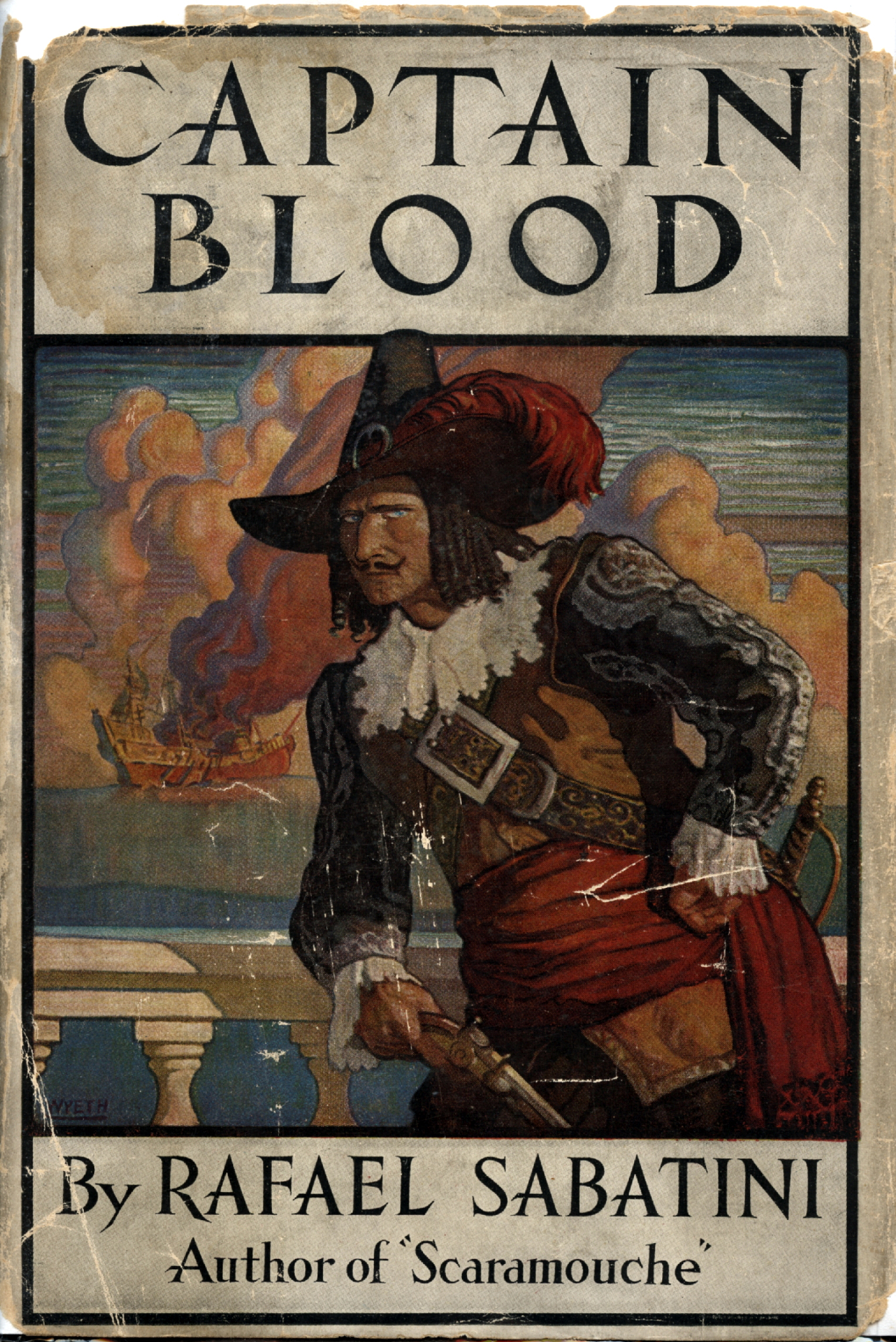
Book Review: Captain Blood

Captain Blood by Rafael Sabatini
While browsing through the audio books on LibriVox, I came across this book. I had just read some Sci-Fi (Permutation City, which was good) and I wanted something more epic in scale, like one of the Dicken's novels. So this was the best fit. It turned out to be a good choice, it kept me good company for the next week.

I listened to this book in twenty minute chunks during my commute to and from the office. All the voices who read the story back to me were clear and precise, though I did find it a little difficult to relate to the Captain's character after hearing multiple renditions of his voice.

The book is well written, even though a bit clichéd. The story is fairly simple but with some twists and turns which kept me on the edge of my seat. The story is coherent and well told. The narrator has gathered these stories of the Captain from the logs kept by one of his buccaneering companion (Jim). The primary theme of the novel is the love between Arabella Bishop and Captain Blood and the narrator breaks-character to give reader glimpses about certain future events which concern it. However, otherwise the narrator remains chronological.

Monday, June 11, 2012

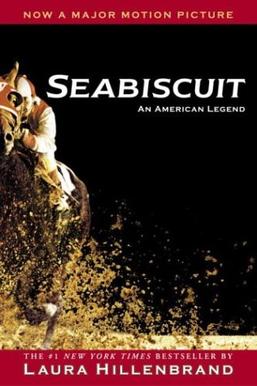
Book Review: Seabiscuit - An American legend

This book is about a horse and four people around it: the owner, the trainer and two riders.

To be honest, I did not start the book with high hopes. To begin with, it was non-fiction and then it was about a horse. About 10 pages deep, I had an inkling that Laura Hillenbrand was luring me into a trap. I distinctly remember thinking "This is not how one writes a historical account" but I could not figure out what was amiss. The facts were all there, the cross-references seemed to match up and I could find nothing wrong apart from some poetic exaggerations which brought forth gentle chuckles. I circumspectly read through the account of earthquake in San Francisco without realizing anything.

It was just after the first race in Tijuana that I realised what was wrong with the book: It wasn't boring!

Friday, May 25, 2012

Book review: The Museum of Innocence

The first 100 pages or so made me consider many times why I was reading the book at all (it came highly recommended) and why didn't Kemal bey just move-on. Why stay there? And moreover, why call it innocence when nothing could have been further away? Why color something purportedly black and white like carnal desires in shades of gray by waving brushes of grandeur on it? Why not just admit it for what it was, why not just smack the monkey, massage the seal, walk the cobra and then do something else?

However, by the time his first year of misery was over, I understood him better. His misery was not a choice. His misery was a way of life. His innocence was blindness and denial, but it still reeked of innocence. He lived in Turkey, he lived the life of a rich man, and though the poor there thought that wealth would cure them of their illnesses, he lived not very differently.

Monday, September 26, 2011

Book Reviews: The Sweet Shop owner, The Help, and Brief Interview with Hideous men

The sweet-shop owner
(Graham Swift)
The Sweet Shop owner

This is a good book. Though the author has not gone out of his way to make it easy to read. It is the story of a special kind of love, a love which is arranged, but still as rock solid as any other kind of love one is likely to find. Where the implicit rules forbid one from making explicit mention of "love". Where effort is made to keep everything static, unchanging and if love was to be brought into the picture, it would result in too much change. My favorite line from the novel is:
 He wrote "5050 helmets" which, of course, meant "I love you."
While reading the book, I often felt as if I was reading another novel by Virginia Woolf. The style of narration is multiple streams of consciousness. However, in case of Virginia Woolf, one still gets long stretches of thoughts of one person before switching to another. However, Swift jumps gleefully from one person's thoughts to another and even through time at occasional places. It is disorienting, but since there is little to surprise in the book, it does not hamper the reading much.

Overall, a decent read.


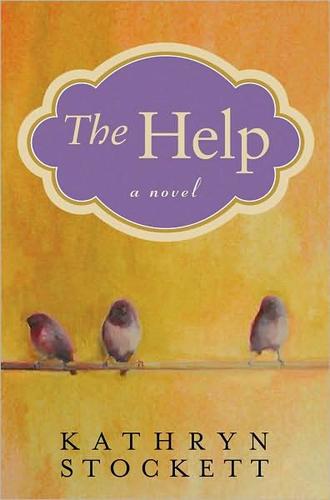
The Help
(Kathryn Stockett)

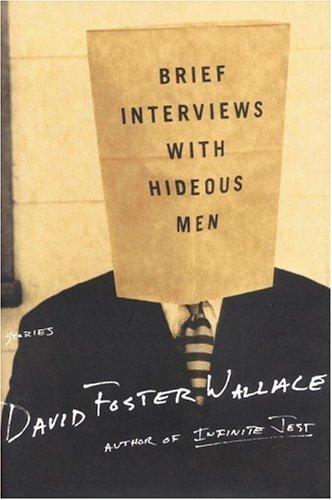
Brief Interviews with hideous men
(David Foster Wallace)


The Help

This book has been made into a movie, which I have not seen. After reading the book, I can see why.

The narration of the story is good. In my personal opinion, as good as Gone with the wind. However, I am not very much into storytelling anyway. There were some pages which just had to be turned in the same session, and there were some places of dullness which were apt places to stop reading and take a break. A comfortable read.

The most entertaining part of the book for me were the various references to the events of that time and of future events sprinkled throughout the book, like assassination of JFK and a joking reference to when they land a man on the moon.

Overall, an enjoyable read.


Brief Interviews with Hideous Men

I could not finish reading this book. This book too has had a movie made on it, but I found the writing of the book to be too repetitive to be engaging. Perhaps actual conversations go that way, but I could not take the deluge of drab repetitions which the men made. More over, one does not know what is the question they are answering and though at times I could infer the questions and at some times, it adds to the reading, but I found it too tiring.

I usually do not leave books unread, taking it one page at a time, hoping that the next one would be better, but I did not find it to be worth it for this particular book.

Sorry.

Tuesday, August 23, 2011

Book Review: Half Asleep in Frog Pajamas

Half Asleep in Frog Pajamas
This is a book about a stock broker. Rather about two stock brokers, one current and one has-been; a she and a he broker. However, this is not a book about the Stock Market per se, neither is this a book about love, nor sleaze.

The book is written in a diary format, with time progressing linearly, with each entry marked with a day and time. The entire book, as advertised, is over in about the time-span of a long weekend.

Each entry in the diary begins off-topic and slowly careens into the old story line: sometimes in enlightening and sometimes in ridiculous ways. It probably reflects how a stock broker thinks when she is not thinking about the stock market. The book is sort of a drag in the beginning, until one gets to the evening of Friday and something of interest happens.

Monday, August 15, 2011

Gabriel's gift : A review

This has to be one of the most inspiring books I have read in a long, long time.

It starts with a magical touch, and a despairing look at the life of a broken family. And it goes uphill from there. There are moments where the book seems about to be taking a sinister turn, but instead it surprises the reader. A quite adorable tale indeed.


It is a very easy read, has a simple story told from the point of view of a precocious school-going teenager Gabriel. Kureishi managers to keep the narrative as well as the ideas extremely simple without losing any credibility at all. What we see in-front of us in the book is London with its motley populace, with stories of inhabitants intertwined and where opportunities seem to be hovering around every corner:
What a bright place London was, he (Gabriel) thought. Here anything could be achieved! You only had to wish high enough!
Opportunities waiting to be grasped by all but the hopelessly self-destructive. And Kureshi's London seems to have many of those, which somehow rings true with London we see today. 

It is amusing to see him trying to avoid vulgarity just like Dickens tried to keep the young readers in the dark about Phillip's exploits in London, but only in Garbiel's thoughts and words. He carefully avoids any detailed descriptions of Speedy's pose or what secret things happened in the bathroom while he drew his mother and her company or the indelicacy of bed's creaking while he was hidden under it. However, whatever we manage to see of London beyond Gabriel, it looks as colored as ever.


Sunday, August 7, 2011

The Rebel Angels: A review

It is not a very easy book to read. However, it is totally worth it. It reminded me of Salman Rushdie's Midnight's children, though magic realism in this book is much more subtle and integrated. The sequel of this book What's bred in the bone contains many more explicit supernatural elements than does this book. However, I like it all the more for it.

The pace of events never dies after the explosive and completely unwarranted introduction. The university atmosphere being built up feels construed in the beginning, but as one gets used to the eccentric characters and Gothic milieu of Spook university, a rich pasture from an imaginative mind emerges. The story is slow paced and borders on being a philosophical text. However, because of the setting of the story, it does not seem out of place. And the instances of philosophy are broken with patches of humor. Yes, the humor in most cases requires knowing some bits of Greek and Roman mythology and history, but the book does not go out of its way to make it hard. Actually, I would like to read the book once again just as I did Great Expectations in my school days, with annotations and helpful hints thrown along the way. The skill of Robertson Davies as a writer clearly shows through here.

This book is narrated via two different point of views, one of pastor Simon Darcourt and the other of Maria Magdalene Theotoky, a student pursuing a PhD in a field which can be vaguely related to medieval literature. They both have almost equal portions of the book dedicated to them with chapter names alternating between The new Aubrey and Second Paradise. The transitions are smooth and only at one point temporal interleaving comes into play, and that is during the climax.

Allusions to various other sources abound and the development of plot is intricate and subtle. The winning point of the book for me was the dry humor of Simon. The dry and cool manners of Arthur Cornish, the narcissist boasts of McVarish, the gypsy ways of Maria's mother and Maria's confounding attempts to distance herself, the crooked ways of Parlabane and the classical University settings and everything else too make it a memorable book.

This is a book about struggle to rid one of one's past and future, or one's fate. Also, entwined in it are love stories, from love of common gadje people to love of gypsies to love referred to as carnal knowledge to love which fringes on platonic and finally a kind which is nothing more than eternal friendship.

Overall, a very very enjoyable book. Highly recommended.

~
musically_ut